
There is only one scene in “Fight Club” I have ever wanted to emulate: Richard Chesler sits on the termite-rotted steps of his basement staircase while partner-in-crime Tyler Durden (who, by this point in the movie, he has repeatedly bludgeoned, bruised, and very nearly killed, all with a smile plastered across his face) stands knee-deep in murky water fixing a breaker box.
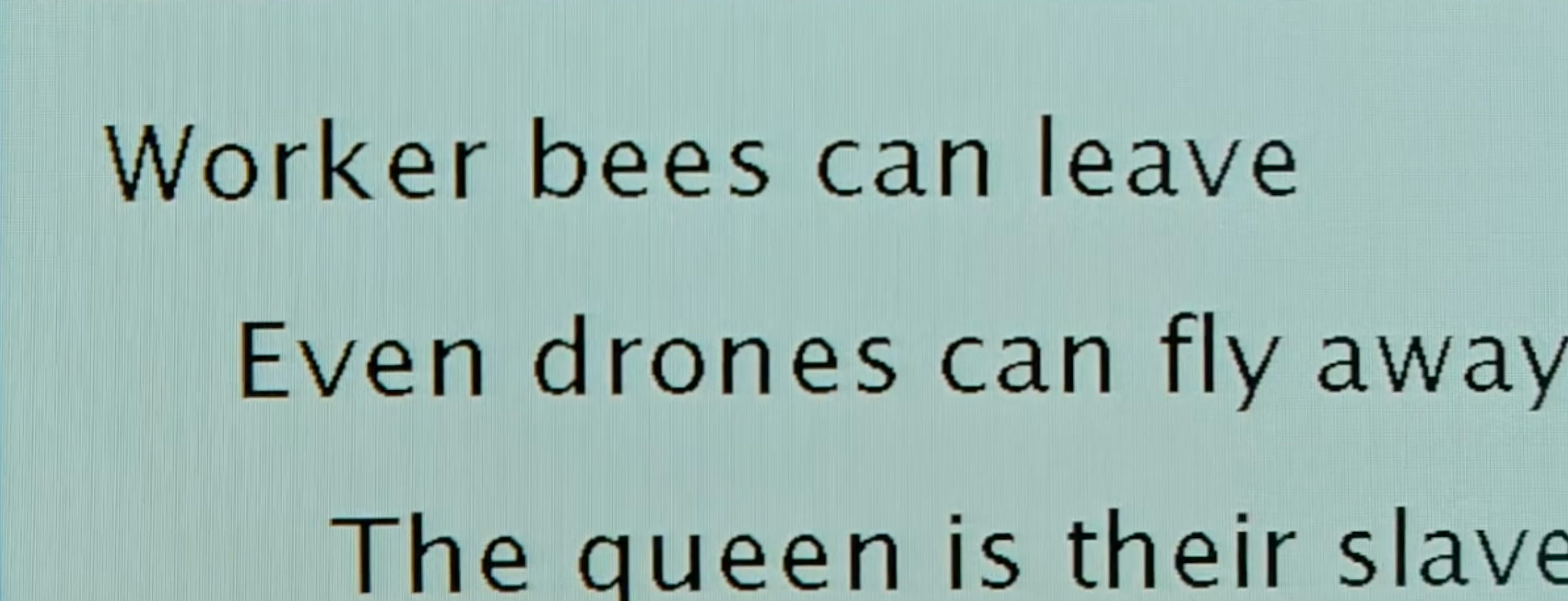
It’s not the scene’s destitution, the blatant pride the pair takes in their masochism, or even the primal fraternity between them that I want to replicate from this scene, though; no, foregrounding the griminess is a piece of narration that has stuck with me long since “Fight Club” disappeared from my Recently Watched list:
“By the end of the first month, I didn’t care about TV.”
It is still the only line in the movie I know.
To not miss your distraction, your guilty pleasure, the light at the end of the tunnel promising you a sliver of happiness no matter how much shit was thrown at you that day—for life to be so good that you don’t want to escape it—I could hardly entertain the notion. It was impossible, completely and utterly unthinkable. There was a reason the line was in a fictional screenplay; far-fetched would be too generous for this fairytale.
Despite my skepticism, the idea stuck with me. I couldn’t get Zach Grenier’s voice out of my head. He began to taunt me on a nightly basis as I wound down with reruns of Kitchen Nightmares, suddenly wondering what I was doing so wrong that I couldn’t fathom not punctuating my days with a talented British asshole bringing middle-aged restaurant owners to their hands and knees for help spinning their soggy crab cakes into gold. Not caring about TV in the same way Richard Chesler didn’t became my only aspiration—all I wanted from that point forward was to find the Thingthat made TV boring.
Well, maybe less find it, and moreso have the courage to actually do it.
I’ve known for a long time that writing was my Thing. Despite my ongoing imposter syndrome about the identity I’ve forged around my craft, I also cannot ignore the evidence in front of me affirming my writerly-ness: one completed manuscript per year of college, the hours I waste on publishing industry podcasts, the pen without fail being the only thing that’s there for me when shit hits the fan. It’s dangerous, how much I love it, because I can delude myself into believing that as long as I am writing, that must mean everything is okay, great, exquisite, even—despite that I walk around with sharper-than-diamond elbows and a face so sunken it looks like it belongs in a Scared Straight ad for skinny girls with low self-esteem (but that’s besides the point).
I have known in my heart of hearts since I was a little girl teaching herself phonics in her free time that writing was always going to be the Thing to turn everything else in the world melt away into inkpools accruing on the page. I have known this, I continue to know this, and this will likely be the last thing I know when my bleeding-artist heart takes its last beat.
I knew. And yet, I still could not (would not) create.
For me, knowing what I wanted to create wasn’t the problem. Nor was it my abilities; I had the drive, know-how, and talent I needed to make my ideas come to life (and I wasn’t lacking on the ideas front, either, my list of which once included a literary criticism book transcribed and edited from my high school magnum opus: an entire notebook’s worth of essays on Lolita, my back-then and still-now favorite book, not for the pedophilia, but for the French! The fucking French! Any one of Nabokov’s translingual moments are worthy of an Alyssa-sized phrase sans fin on its own; the language puts you in the naive shoes of little Lo, renders intentionally unintelligible the strange, adoring curiosity we have for the parts of our lives that control us via their romantic estrangement, that hedonistic ignorance it affords, that sensation of novelty and newness that comes with the radical act of not knowing—)
I’m getting off track now, and perhaps that is all the evidence I need to know that not only is this the right path for me, but also that I deserve to be the one who takes it. Dedicating my life to putting words on pages isn’t the only road I can take, a fact my more skeptical friends seem to relish in pointing out. But it’s the only one I want to.
Tell me why, then, for all I knew about what it was that would bring me the freedom and joy of a TV-to-the-wind existence, I spent years centering my life around dying.
My day’s worth was measured by how many meals I could skip without my friends saying anything, how many calories short of my TDEE I was, how hard I went at the squat rack and how close I came to passing out mid-stairmaster. Despite having everything I needed to improve my life at my fingertips, I still chose pain.
The most logical thought an outsider may have: Why make yourself suffer so much?
The one I think you had instead: My god—I’m doing the same thing.
You probably don’t starve yourself to double digits. You probably don’t have an arsenal of diet foods hidden in your closet to binge on when you wake up with hunger pangs loud enough to be your 2 a.m. alarm clock. But if I had the money to gamble, I’d bet I wasn’t the only one here self-sabotaging.
Going to a big school like UCLA that’s supposed to be full of successful, driven people, absolute models of society, made me think that everything they do is normal. Better than normal—healthy. So I joined in as my friends found “balance” by spending their Saturday nights in piss-soaked frat houses that turned into Sunday morning bottomless as a hangover cure. I swipe-swipe-swiped Tinder in my free time, but really only talked to the guys on Hinge. I cleaned off my pinky, blew my nose with a grin when — asked for a “bathroom buddy.”
I wish I could say I was a product of my environment, that I was a victim to sets of toxic norms and chronic burnout from which distraction the only way out. But I wasn’t, at least not entirely. Our environments reinforce and promote certain behaviors and values, sure, but we also play a role in shaping the environments we’re in. There weren’t marionette strings tied to my legs, no ventriloquist’s hand up my ass forcing me to remain where I was. My fear of loneliness kept me tied to spaces where I was out of alignment with who I wanted to be—who I was before the lilypad hopping and the treatment rounds and the job titles. All the while, I sat wondering: Why am I choosing to derive pleasure from this? I knew my passion, I knew my calling. I wanted to put words on pages, and I wanted people to read them. My pleasures in life were simple, but I got distracted from them.
Maybe you don’t have the same passion for writing as me. Maybe your Thing is visual art, music, or just the habit of living a joyful life, period. Hell, maybe you have no clue what your secret sauce to life is. Regardless of our differences, though, there is a throughline in our stories: fear.
Confession—I think I have a fear of not being distracted. I think we all do. For me, it’s because I know. I know I stick out like a sore thumb in my corporate office for a reason, and I know that seeking a promotion will only make my early-morning migraines worse—but I ask for more responsibilities anyways, cope with burnout by burning myself out even more, convinced that my passion will carry me through until the euphoric, godlike “second wind” finally hits. But ease is failure to this little bug in my brain that still fears authentic success. It is so daunting to be happy when a smile is as much a sign of weakness as it is joy.
Letting my dimples show in these past weeks of fight-clubbing my way through city life has made me realize that there’s a chance what my friends and family have been trying to convince me of for years is true: I am a creative thinker with tangible assets to bring to this world. Choosing to give credit to what I create makes me think that dreaming up fantasies about seeing my name on bookshelves isn’t a sign that my optimism is getting the best of me—it’s a sign I’m on the right path. My toes may be cramped in these corporate kitty heels right now, but I sometimes forget that the reason I’ve spent my life building up callouses is so that I always have the option to walk off barefoot.


Leave a Reply